The Future of Food Innovation Is Human-Driven and AI-Enabled
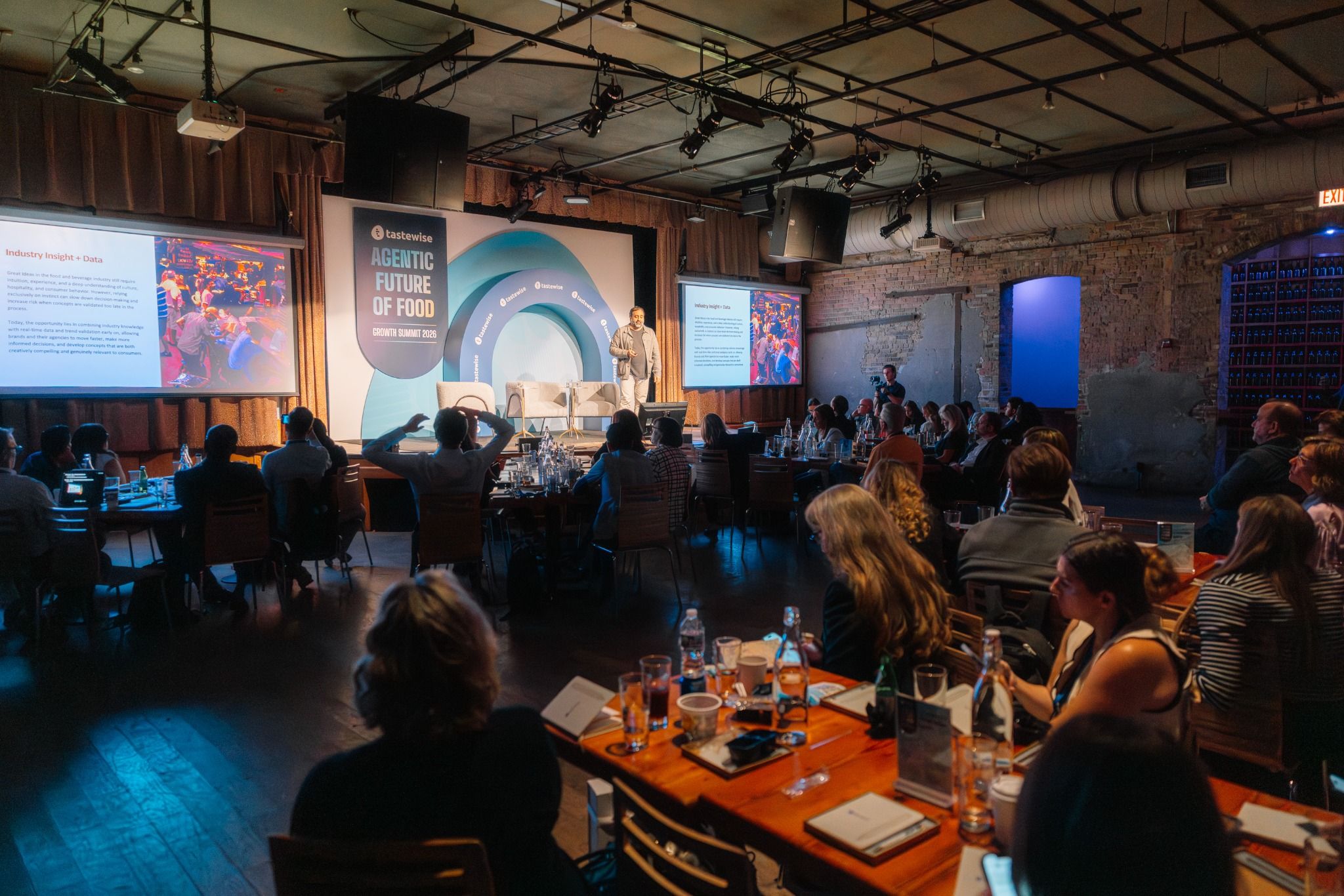
A few days ago, I had the opportunity to speak at the Tastewise Summit about how we use data and AI at Gluttonomy to develop food and beverage brands, hospitality concepts, content platforms, and consumer experiences. While the presentation focused on our methodology and the role that tools like Tastewise and AI play in our work, the conversation ultimately led to a broader question that I believe our industry will continue to grapple with over the coming years:
As AI becomes more powerful and data becomes more accessible, what remains uniquely human?
It is an important question because food has always been a deeply human business. We may analyze it through sales figures, menu penetration, social conversations, and consumer sentiment, but at its core, food is still about culture, memory, identity, and emotion. It is about people gathering around a table, passing down traditions, discovering new flavors, and finding meaning through shared experiences. Technology can help us understand these behaviors better than ever before, but understanding data and understanding people are not necessarily the same thing.
At Gluttonomy, our work begins with curiosity. When a client approaches us with a challenge, whether it is launching a new product, developing a hospitality concept, creating a content platform, or building a brand, we start by trying to understand what is happening in that specific segment and why. This is where platforms like Tastewise have become invaluable. They allow us to move beyond assumptions and access real-time signals from menus, retail environments, social conversations, and consumer behavior. They help us identify emerging trends, validate opportunities, and separate meaningful shifts from short-lived hype.
The speed at which this can happen today is remarkable. Through our integration of Tastewise into our broader AI ecosystem, we can synthesize large volumes of information, compare multiple strategic directions, and accelerate the journey from insight to concept. Tasks that once required weeks of research can now be accomplished in a fraction of the time, allowing us to focus more energy on interpretation, creativity, and decision-making.
Yet despite all these advances, data remains only the starting point.
One of the ideas I shared during the conference is that while data can tell us what is happening, experience helps us understand why it matters. A dashboard may reveal that Mediterranean flavors are growing, that consumers are prioritizing functional ingredients, or that a particular cuisine is gaining traction among younger audiences. These insights are incredibly valuable, but numbers alone cannot explain the emotional connection people have with food, nor can they fully capture the cultural context behind a trend.
How can I help build a Mexican brand if I have never tasted an heirloom corn tortilla after it leaves a hot comal in Oaxaca?
How can I develop a strategy around Italian cuisine if I have never spent time discussing the future of Italian food with chefs like Massimo Bottura, listening to their perspectives on tradition, innovation, and responsibility?
How can I evaluate the authenticity of a Peruvian concept if I have never walked through the Andes with Virgilio Martínez and his team, learning how altitude, biodiversity, and geography shape the hundreds of potato varieties that define a country's culinary identity?
These experiences are not data points. They are context. They provide texture, nuance, and understanding. They teach us how food connects to people, places, and stories. Most importantly, they help us develop judgment.
And judgment is becoming one of the most valuable skills in the age of AI.
For years, expertise was largely defined by access to information. Today, information is abundant. Anyone can generate a list of trends, summarize a report, or ask an AI model to produce ten concept ideas in seconds. The challenge is no longer finding information. The challenge is knowing what to do with it.
Not every trend deserves attention. Not every consumer signal represents an opportunity. Not every concept generated by AI should become a brand. The ability to distinguish between noise and relevance, between novelty and long-term value, comes from experience. It comes from having spent years inside kitchens, restaurants, factories, bars, farms, and dining rooms. It comes from understanding the realities of hospitality operations, consumer psychology, and cultural behavior.
This is why I believe the future of food innovation is not AI-driven. It is human-driven and AI-enabled.
The companies that will thrive are not those that blindly adopt technology, nor those that reject it. They will be the organizations that successfully combine data with intuition, speed with judgment, and technological capability with human understanding. They will use AI to become more informed, more efficient, and more confident in their decisions, while continuing to rely on people to provide meaning, creativity, empathy, and cultural perspective.
At the conference, I shared examples ranging from hospitality concepts and beverage activations to editorial platforms and content ecosystems. Although the outputs were very different, the process behind them was remarkably similar.
We began by identifying signals, validating them through data, interpreting them through the lens of experience, and translating them into concepts that can exist in the real world. That process reflects what I believe is the future of our industry.
AI can help us discover opportunities faster than ever before. But it is still human curiosity, cultural understanding, and lived experience that transform opportunities into meaningful brands, products, and experiences. The future, at least from where I stand, belongs to those who can embrace both.
- Food event
- -
- MiamiTech
- -
- Tech Products